


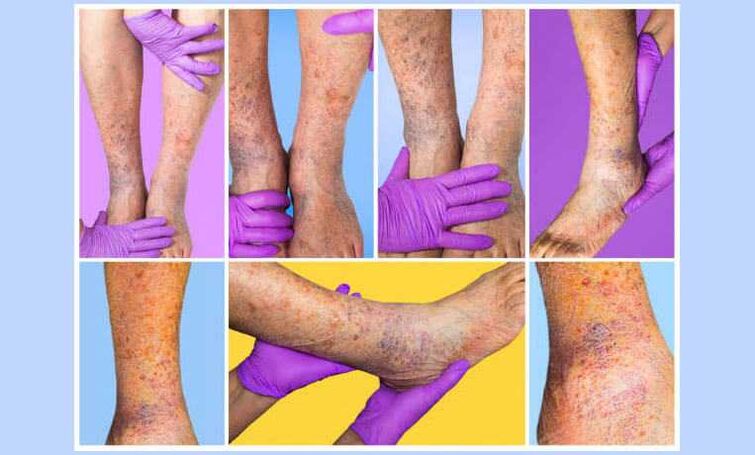
The first signs of the development of varicose veins are often attributed to ordinary fatigue, a trip to the doctor is ignored, and they continue to lead their usual lifestyle, aggravating the condition of the veins.Complications with varicose veins develop very quickly.Mostly those who require surgical intervention come to the specialist.Until this moment, everyone is trying to cure themselves with the help of tinctures and tablets.
How not to bring yourself to a deplorable state and take the necessary measures in time?First, you need to understand when you need to see a doctor.Secondly, go to the doctor as soon as you realize it’s time.This is not a case where you should wait a little and see what happens to the veins.Any delay can cost you dearly.The article contains descriptions of the signs of different types of varicose veins, which will help determine whether you suspect the disease.
Why do varicose veins appear?
If you know the causes of varicose veins, you can protect yourself in time by taking preventive measures.
- Heredity. If one of your relatives suffers from varicose veins, then there is a chance that you will have it too.Varicose veins themselves are not inherited, but you may inherit structural features of the veins or, for example, a tendency to be overweight, which will affect the occurrence of problems with the veins.
- Pregnancy. During pregnancy, a woman's body produces an increased amount of progesterone, which relaxes the walls of the veins.They can't do their job and the blood stagnates.Also during pregnancy, a woman’s body weight increases and the amount of circulating blood increases, which increases the load on the veins.
- Overweight. Large body weight creates a constant load on the lower limbs.It is more difficult for the veins to supply blood to the heart and lungs, the blood stagnates, and the veins dilate.As a result, venous expansion of the veins occurs.
- Wearing uncomfortable clothes and shoes. If shoes are too narrow and tight, this prevents blood from circulating normally in the legs.The same goes for clothes that are too tight.
- Old age. Age-related negative changes occur in the walls of blood vessels.They lose their elasticity, the vessels stretch and blood accumulates and stagnates in them.
How to understand that varicose veins are developing on the legs
Many people believe that the first signs of varicose veins are spider veins, swollen areas of veins and other external manifestations.But the pathology is very insidious and for a long time disguises itself as ordinary fatigue of the lower extremities, without revealing itself from the outside.
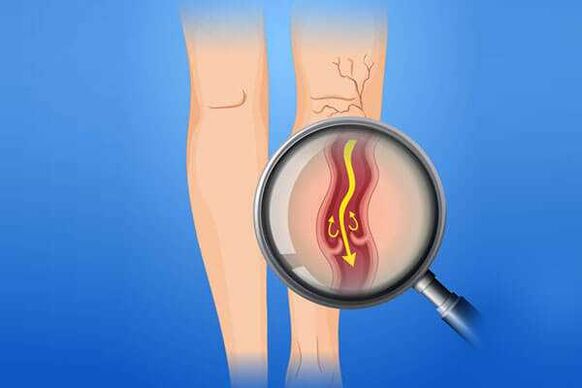
Signs of the development of varicose veins that you need to pay attention to:
- Frequent muscle cramps. Since blood does not circulate in the required mode through the veins, it stagnates and, as a result, oxygen starvation of the tissues.These factors lead to seizures.
- Unhealthy skin color on legs. Lymph and blood do not circulate well in the affected areas of the lower extremities.The skin color here becomes lighter with dark spots.As the disease progresses, these spots begin to become red, swollen, and itchy.If treatment is not started, the likelihood of trophic ulcers increases significantly.
- Shins and ankles begin to itch for no reason.In the vessels that are adjacent to the skin, transformations occur due to stagnation of blood and lymph.Metabolic products are not removed from these areas properly, which leads to itching, burning, peeling of the skin of the legs and its excessive dryness.
- Tingling, numbness of the limbs. At the initial stage of varicose veins, the feet may become numb for no reason.The patient will feel a tingling sensation.These symptoms arise due to poor functioning of the joints and tissue hypoxia.Normal motor activity is disrupted because the tissues lack interarticular fluid.If numbness becomes regular, then a visit to the doctor should not be postponed.
- Swelling.When the valve does not work at full strength, fluid accumulates in the intercellular space and swelling occurs.People prone to varicose veins are recommended to measure the volume of their legs in the morning and in the evening.A reason to sound the alarm and visit a phlebologist would be a 1 cm upward change in the readings in the evening.
- Pain in the legs after a static position. If a person sat for a long time or just stood, and after that the lower limbs began to hurt and “hum,” then it is worth paying special attention to this factor.
At the final stages, dilated veins clearly appear on the skin of the lower extremities against a background of swelling and pain.During the period of decompensation in the last stages of varicose veins, signs of thrombophlebitis and trophic ulcers may appear.
Why is reticular varicose veins considered a mild form?
Varicose veins of the lower extremities have a separate type - reticular varicose veins.It is common mainly among women and is considered a mild form of varicose veins because in this case only the thin veins dilate.
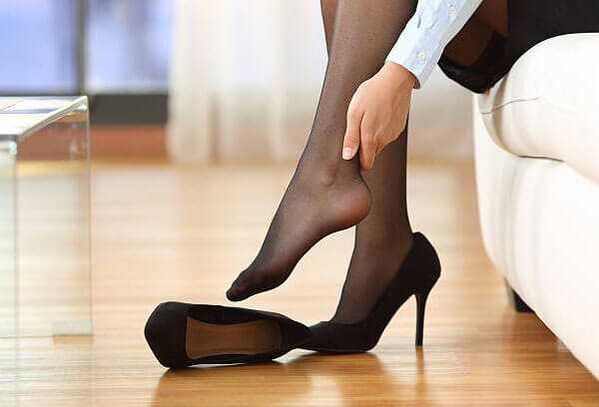
Reticular varicose veins are often called cosmetic, since the main symptoms are external manifestations in the form of spider veins on the calves and thighs.Reticular varicose veins occur most often due to wearing high-heeled shoes, severe physical activity and taking hormonal pills.
Despite the fact that reticular varicose veins are mild, they need to be treated to avoid possible complications.Treatment of pathology of this type is carried out using ointments and gels of a venotonic nature, drug therapy, and laser.Traditional surgical operations performed with a laser, especially a scalpel, are very rarely used.
What are the symptoms of pelvic varicose veins?
If venous blood stagnates in the pelvic area, this can lead to the appearance of varicose veins in this area.It can stagnate due to sedentary work, mechanical compression of the veins by the enlarged uterus, and uncontrolled use of hormonal drugs.The cause of the appearance of dilated veins in the pelvic area can also be poor nutrition, constipation, hernias, problems in the genitourinary area, pathologies in the pelvic organs, nervous disorders and insomnia.
Most often the disease occurs in women.Pregnant women and menopausal women are at risk.The pathology manifests itself as pain in the perineal area, which becomes more intense after hypothermia or a long stay in a sitting position.Also, venous tubercles form in the perineal area, the process of urination becomes painful, and unpleasant sensations are observed during and after sexual intercourse.
All these signs require immediate contact with a specialist, because without adequate therapy, varicose veins of the small pelvis are aggravated by complications: thrombosis, thrombophlebitis, trophic ulcers.Pathology is diagnosed mainly by ultrasound examination, if there are no external signs yet.
How to determine the appearance of varicocele
Varicocele is a purely male type of varicose veins, which is an expansion of the veins of the spermatic cord.Signs of varicocele include nagging pain and a feeling of heaviness in the groin area, shrinkage of one of the testicles, enlarged veins under the skin, and frequent urination.
Why does pathology occur:
- the valves of the spermatic cord veins do not work well;
- there is not enough connective tissue forming the venous wall;
- the valves of the spermatic cord and testicles are underdeveloped;
- disruptions in the process of formation of the inferior genital vein in the womb.
If a man has high abdominal pressure, often experiences constipation, spends a lot of time sitting or standing, or exposes his body to excessive physical activity, then the risk of varicocele increases significantly.This disease has three degrees of severity: at first the veins can only be palpated in a standing position, at the second stage the lumps can be palpated while lying down, and at the third stage the swollen veins of the spermatic cord on the testicle are visible to the naked eye.
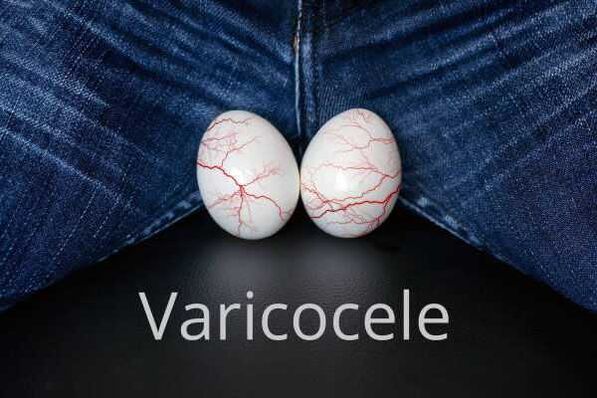
The stage when the testicles are covered with numerous clusters of veins is considered final and requires emergency treatment.After all, neglected varicocele very often becomes the cause of male infertility, thrombosis, thrombophlebitis and other complications.Pathology is diagnosed using an external examination, ultrasound, MRI or CT.Adult patients are often prescribed a spermogram to determine sperm activity and exclude asthenozoospermia.
What are internal varicose veins
With internal varicose veins, it is not the superficial, but the deep veins that are affected.The usual external signs in the form of bulging veins and vascular networks are often absent.The pathology is manifested by soreness of the lower extremities, which is often mistaken for banal fatigue.Elderly people are susceptible to internal varicose veins, whose deep veins transform due to age-related changes, become less flexible and elastic, and the valve system suffers from wear and tear.If the pathology is not treated, ulcers form on the lower extremities, which are difficult to heal.
Internal varicose veins are very difficult to recognize in the initial stages.Therefore, everyone who has a genetic predisposition to this disease is recommended to undergo a preventive ultrasound at least once a year.Since the deep veins are surrounded on all sides by muscles, it is impossible to detect their deformation during a visual examination.
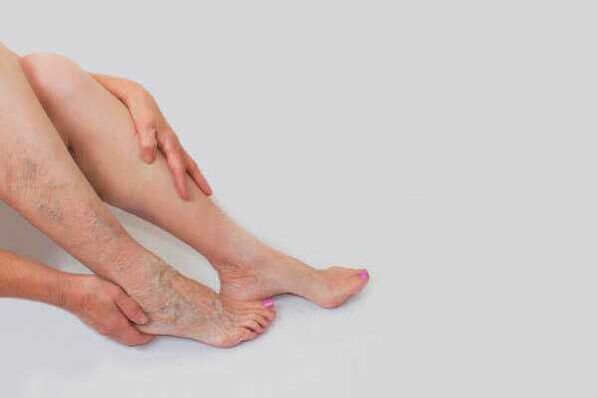
What does varicose veins of the foot look like?
At the very beginning of the development of pathology, one feels heaviness and fatigue in the legs by the end of the day.Next, aching pain may appear, a sensation as if the leg is bursting, and the foot swells.All these symptoms may go away on their own after rest.But you shouldn’t put off going to the doctor.If varicose veins of the feet are not treated at the initial stage, the disease will begin to progress.First, spider veins and spider veins will appear, then varicose veins will also affect large veins.At this stage, the pain becomes constant, the legs begin to swell more, and muscle spasms appear.
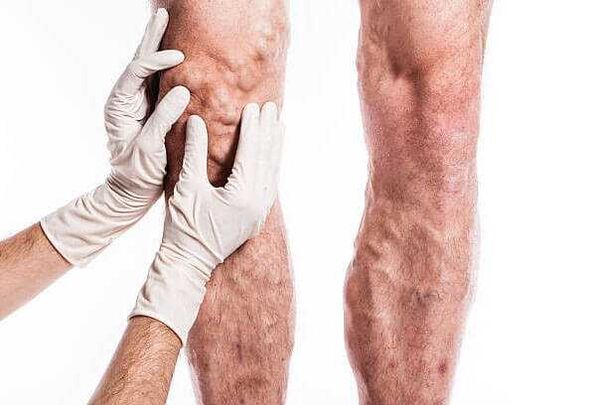
Complications due to varicose veins
If treatment for varicose veins is not carried out or is carried out insufficiently, then sooner or later complications arise.These include venous thrombosis.A blood clot forms in the lumens of the vessel, which leads to thrombophlebitis.The vascular walls become inflamed, and the blood clot plays the role of a time bomb, because at any moment it can break off and clog vital arteries.Thrombophlebitis progresses especially quickly after infectious diseases, during air travel, difficult childbirth and complex surgical interventions.
Deep vein thrombosis of the lower extremities occurs very quickly.Literally within a few hours, inflammation occurs on the vein, the lower leg increases in size, swells, and acquires a bluish tint.At the slightest physical exertion, a person feels acute pain, but rest does not bring complete relief.
Trophic ulcers occur due to disruption of the blood flow process in tissues, resulting in necrosis and tissue rejection.First, severe swelling and burning of the skin appears.The legs become as if wet due to lymph seeping out; small ulcers first appear on the skin, which subsequently develop into large, non-healing wounds.
Very often, complications of varicose veins manifest themselves in the form of venous bleeding, which is sometimes impossible to stop without medical intervention.If a person with varicose veins has been injured in the area of bulging veins, lifted an unbearable weight, or overexerted in sports, then the likelihood that the thinned vein may burst increases.